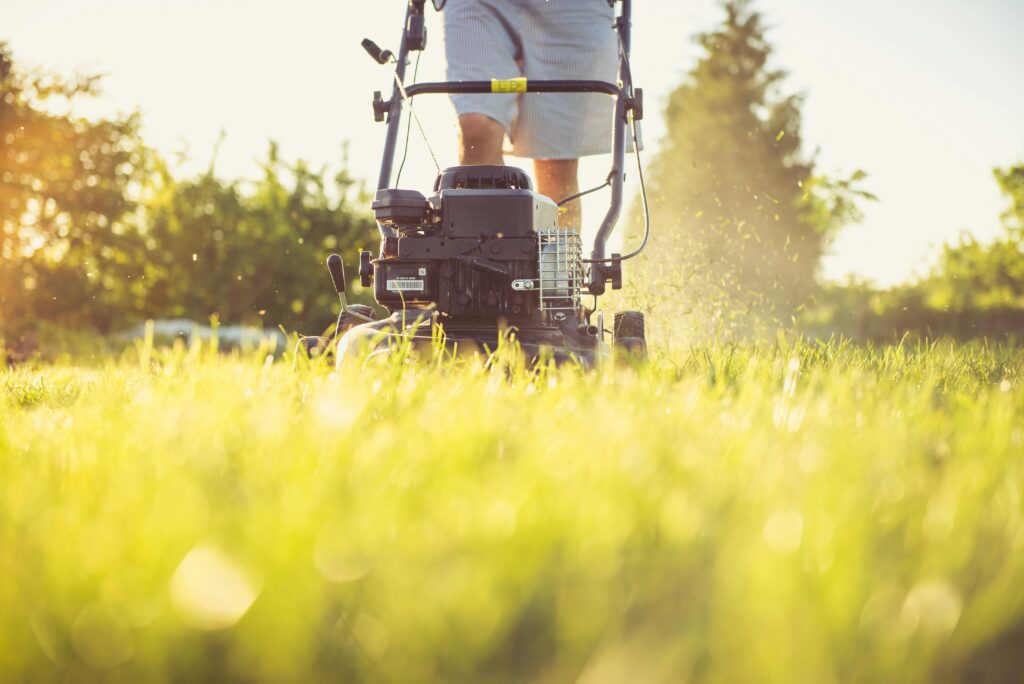
There’s no underestimating the effect a lush and green lawn can have on a home. A well-cared-for lawn can add loads of curb appeal to your spring garden and house. Follow these spring lawn care tips to help your own front yard flourish in the warmer spring months.
Spring Lawn Care Tip #1: Be Patient
In Alberta, we know that the start of spring doesn’t necessarily mean the end of cold weather. Unless you are new to Alberta, you are probably used to the warm spring weather not arriving until much closer to summer.
While it’s still cold, the ground hasn’t thawed, and your grass is still dormant. There’s not much you can do for your lawn, but let it continue its winter rest. For most spring lawn care tasks, you’ll want to wait until your grass gets some of its green back, the ground is thawed and dry, and you are fairly sure that the cold season is behind you. This may be especially true for the tasks that require you to walk on your lawn. According to the experts at Garden Myths, walking on lawns that are still wet could compact the soil, damaging it and making it difficult for grass to grow in the future.
Spring Lawn Care Tip #2: Get Your Mower Ready
You’ll be using your mower fairly frequently throughout the warm months. Take this time to prepare it for the heavy workload.
Preparing your mower is one task you can get out of the way while you perform spring home maintenance and wait for consistently warm weather to arrive. However, you’re likely to work on your mower outdoors, so you probably don’t want to do this while it’s still freezing out.
Give your lawn mower a good tune-up by:
- Changing the oil, spark plug, and any air filters
- Sharpening or replacing blades—dull blades might pull grass up rather than giving it a nice clean cut
- Cleaning off old dirt and grass
If you have an edger, you can use the above tips to tune it up for use during the warmer part of the year.
Spring Lawn Care Tip #3: Do Some Light Raking
When your grass begins to show some green, and the ground is thawed, start off your spring lawn care by giving your lawn a gentle rake. Concentrate on clearing the lawn of dead leaves and debris that may have gathered during the winter rather than getting deep into your grass (this is something you’ll save for later). This is also a great chance to inspect your lawn and see if there are any trouble areas, such as dead or bare patches or areas infested with snow mold, that you’ll have to take care of later.
Spring Lawn Care Tip #4: Dethatch Your Lawn
Thatch is a layer of organic material made up of old and dead grass roots and other parts of grass that sits right on top of the soil in your lawn. A thin layer of thatch can be beneficial to your lawn as it may keep the soil insulated from extreme temperatures. On the other hand, thatch that is too thick may harm your lawn and keep nutrients, air, and water from the soil. Getting rid of excessive thatch or dethatching may play a role in keeping your lawn healthy.
Minimally, you’ll need a rake and some elbow grease to dethatch your lawn. Rake deep into your lawn vigorously to remove the layer of thatch.
You can also dethatch your lawn by machine. Power dethatchers come in all shapes and sizes. Since you’ll not be using this machine regularly, you may want to rent one from a local tool and hardware store rather than purchasing your own.
Spring Lawn Care Tip #5: Aerate Your Lawn
As with any living organism, breathing is essential for your lawn. Heavy foot traffic can compact soil, which may hinder airflow to the roots and restrict the proper circulation of water and nutrients to your lawn. Aerate your lawn to combat compacted soil and its harmful effects. This involves poking several small holes in your lawn.
When to aerate your lawn varies depending on the type of grass and climate. Around Alberta, it’s suggested that you aerate your grass in late spring or early summer and around the middle of September.
You can use several hand or power tools to aerate your lawn. There are even tools you can attach to your shoes. Typically, aeration tools are either spike or plug aerators. Spikes simply poke holes in the ground, while plug aerators remove plugs of soil and grass from the lawn. As with dethatching machines, you might want to consider renting an aerator machine instead of purchasing one.
Spring Lawn Care Tip #6: Fertilize Your Lawn
You should start fertilizing your yard three weeks after grass starts to grow and get green again. In Alberta, this may mean that you cannot fertilize your law until late spring or early summer. According to the experts at better-lawn-care.com, this is also around the time you should start watering your lawn. Wait for the weather to stay consistently free of snow and rain before you start regularly watering your lawn. This will promote healthy root growth and save you from using water while nature already provides it.
Fertilizer is typically either organic, like compost, or synthetic. Both types provide the soil with nitrogen, phosphorus, and potassium. Labels on store-bought fertilizer will tell you the percentage of each of those nutrients. Look for a ratio of about 4 (nitrogen) -1 (phosphorus) -2 (potassium).
Be careful not to add too much nitrogen to your lawn as it could kill the grass by way of fertilizer burn. To avoid fertilizing issues, have a professional lab test and analyze your soil to learn how much or how little fertilizer your lawn needs.
Spring Lawn Care Tip #7: Overseed Your Lawn
Overseeding is simply the process of spreading grass seeds over your lawn. Before the cold hits, you’ll want to overseed your lawn first in the fall. As your grass grows in the spring, you may find patches of empty space in your lawn or patches of dead grass. You may want to overseed these areas to help promote fresh grass growth. However, taking general good care of your lawn (watering, mowing, fertilizing, etc.) may also help revive the troubled areas of your lawn.
If your lawn is susceptible to weeds, you might want to consider overseeding empty spaces. By seeding the empty space with new grass, you can keep unwanted weeds, like crabgrass, from growing.
Spring Lawn Care Tip #8: Remove Weeds
There are a few ways to handle weeds in your lawn during the spring. As a preventative measure, overseed your lawn before cold weather hits. Overseeding in the fall may help promote healthy grass growth in the spring or early summer, giving little to no room for weeds to grow.
You can also attack weeds chemically. Preemergent herbicides stop certain weed seeds from growing out of the soil, while post-emergent sprays attack weeds that have already emerged. Before you go the chemical route, research the effects of any chemical on your grass.
If you don’t want to spray your lawn, you can pull out weeds manually. Various weeding tools can help simplify this task.
Taking good care of your lawn could get it to the perfect green shade that makes your neighborhood buzz. We hope these spring lawn care tips can help your lawn get to where you want it. As one of the energy providers in Alberta, we’ll be sure to be in awe of your pristine lawn.